NCD Programme
Non-communicable disease screening and care at Hargeisa Group Hospital, the first specialised NCD centre of its kind in Somaliland, transitioning to local management through a phased subsidy reduction.
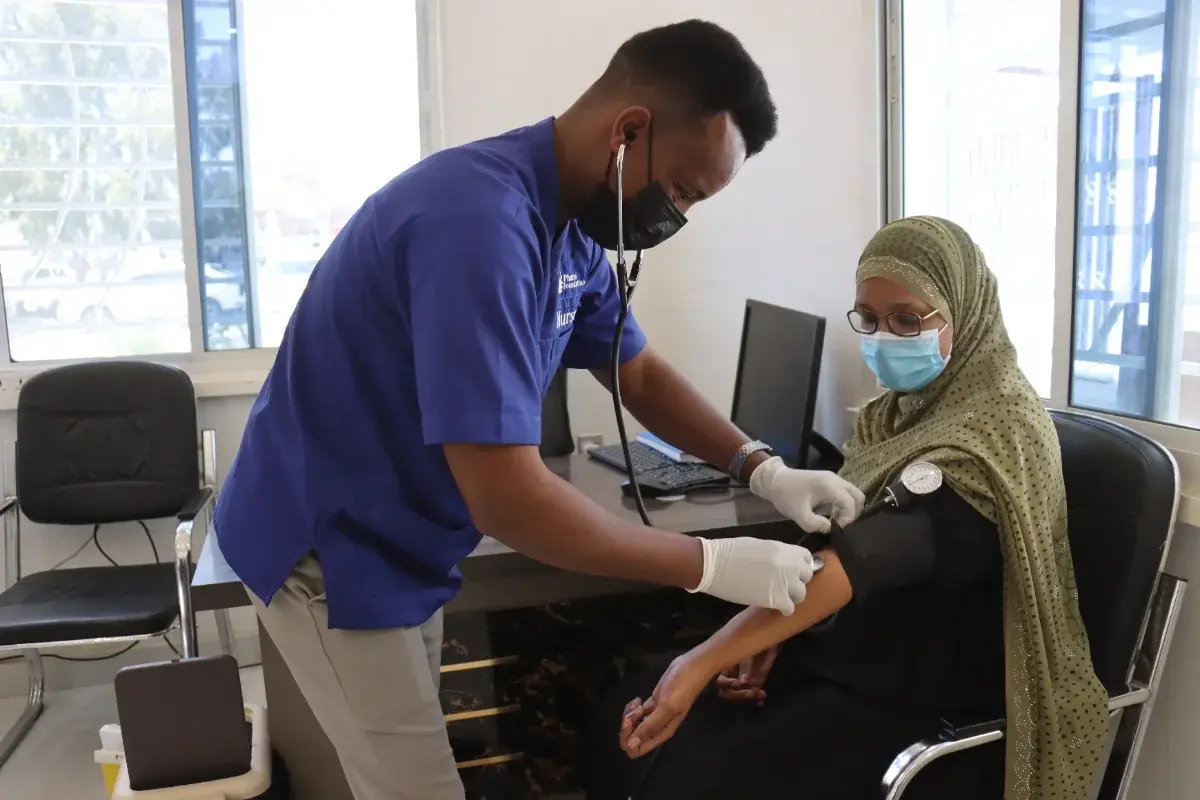
NCD programme, Hargeisa, Somaliland.
Health is a productivity constraint.
Non-communicable diseases are an emerging and under-addressed barrier to workforce participation. In partnership with the Ministry of Health Development, Pharo set up the first specialised NCD centre in Somaliland at Hargeisa Group Hospital, the national referral hospital, combining screening, treatment, community awareness and training for health workers.
Since inception the programme has recorded 19,597 outpatient visits and served 9,643 unique patients, with nearly a third newly diagnosed, indicating substantial unmet need. Diabetes accounts for the majority of cases, alongside hypertension and the two conditions in combination.
A ticking health bomb, under-diagnosed and under-treated.
The World Bank reports that over 30% of all deaths in Somaliland are attributed to non-communicable diseases, and all of them occur prematurely. A hospital study in Hargeisa and Burao found that 18.2% of the patients were suffering from NCDs, led by hypertension and diabetes. Yet information on NCDs is scarce, so they remain both under-diagnosed and under-treated: many people do not know they are living with diabetes or hypertension until complications arrive.
Before the centre, the existing hospitals had no specialised NCD clinics and could not provide high-quality management and treatment.
Our response
A two-pronged strategy: close the awareness gap through community screening and education, and close the services gap by building specialised NCD care inside the national referral hospital.
Screening and care
Detecting and managing diabetes and hypertension at the Hargeisa centre, with strict treatment protocols and follow-up.
Community awareness
Health promotion and community-based screening: over 12,000 people screened across Hargeisa, with more than a fifth found to be living with previously undiagnosed NCDs.
Train health workers
281 health workers trained to integrate NCD services into primary care and widen quality provision across Hargeisa districts.
Phased handover
Subsidy declines from 72% in 2026 to 25% by 2028 as the hospital builds revenue-generating capacity.
Our impact
2025 figures, reported in the annual report.
What we learnt
Awareness is half the battle.
Screening 12,000+ people revealed that over 20% were living with undiagnosed NCDs, demand that simply was not visible before.
Protocols change outcomes.
Strict treatment protocols and diligent follow-up drove a 70% improvement in patient adherence among repeat patients.
Plan the handover.
A phased subsidy reduction gives the hospital time to build the capacity to sustain the centre itself.
Support health and productivity.
Partnership, co-funding and operator enquiries start here.