Teacher Capacity Building
A Rwanda teacher-development programme that puts a mentor inside the school, coaching certified and uncertified teachers in learner-centred practice, and building toward a nationally recognised teacher-certification programme.
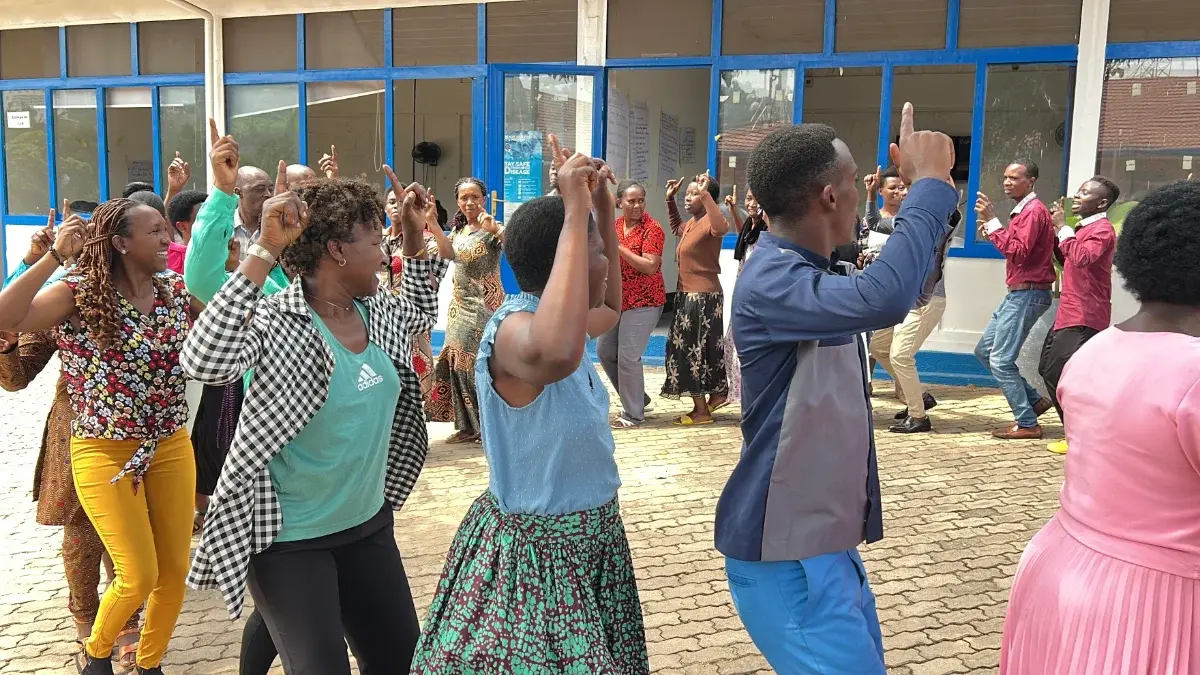
Teacher Capacity Building, Gasabo District, Rwanda.
Better teaching is the highest-leverage investment in education.
The Teacher Capacity Building (TCB) programme works inside Rwanda’s public and community schools, pairing customised training with sustained, school-based mentorship so that better practice actually reaches the classroom, and stays there.
After a 2024 pilot across 16 schools, the programme scaled to a multi-year effort in Gasabo District. It combines workshops on learning-through-play and learner-centred pedagogy with in-school coaching: mentors co-plan, co-teach, model lessons and give feedback, rather than running one-off training that fades.
It is run by Pharo’s Rwanda education team under Head of Education Christine Osae, and is deliberately designed to be adopted: the long-term goal is a nationally recognised teacher-certification programme, with Pharo’s modules taken into Rwanda’s Teacher Training Colleges.
A high share of teachers were never formally trained.
In Rwanda, around 58% of teachers at preschool and elementary level are uncertified. The result is weak school readiness, delayed Grade 1 entry, higher repetition and dropout, and low transition to secondary, holding back learning outcomes and, ultimately, economic development.
Efforts to fix this are fragmented across government and NGOs, and often rely on a "cascade" model whose content dilutes as it trickles down, with little follow-up to ensure training reaches the classroom.
Our response
Put a trained mentor inside the school, differentiate training for certified and uncertified teachers, and build the evidence to take the model national.
Customised training
Differentiated workshops on educational psychology, child development, classroom management and learner-centred strategies, with play-based pedagogy focused at the early-years tier.
School-based mentorship
The proven heart of the model: mentors co-plan, co-teach, model lessons and observe, working toward a 1:20 mentor-to-teacher ratio for genuine support.
Build for adoption
Deliver modules into Teacher Training Colleges, engage government and NGOs, and use ICT platforms to extend reach, all aimed at a nationally recognised certification.
Our impact
2025 figures, reported in the annual report.
What we learnt
School-based mentorship is what works.
The single clearest lesson from the pilot: ongoing, in-school support and mentorship drives professional growth far more than off-site workshops. The pilot’s 1:43 mentor ratio was too thin, so the scaled model targets 1:20.
Match the pedagogy to the level.
Play-based learning lifted engagement and outcomes at preschool, but early primary benefits more from structured, inquiry-based approaches, so training is differentiated by tier.
Focus where you are welcomed.
Public and community schools embraced the programme and implemented it well; private schools engaged inconsistently, so the scaled programme concentrates on public and community schools.
Design the exit from day one.
The goal is not a permanent Pharo programme but a nationally recognised certification embedded in Rwanda’s teacher-training system, aligned to the Education Sector Strategic Plan.
Scale teacher development with us.
Partnership, co-funding and operator enquiries start here.